
 written by
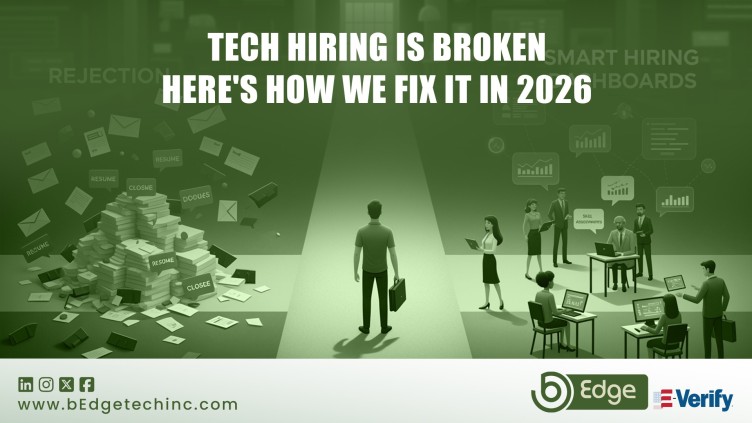
 Why the Traditional Hiring Process Fails in Tech
The conventional recruitment model was designed for a different era. Multi-round interviews spanning six to eight weeks have become standard, yet they fail to predict job performance accurately. Candidates endure endless technical interview questions that test algorithm memorization rather than practical problem-solving abilities.
Resume screening eliminates talented professionals who lack prestigious university degrees or Fortune 500 experience. Meanwhile, developers spend countless hours preparing for coding interview formats that bear little resemblance to actual work responsibilities. This disconnect creates frustration on both sides of the hiring table.
Geographic limitations compound these issues. Companies in tech hubs like Silicon Valley, Boston, and Austin compete for the same limited talent pool, driving salaries upward while overlooking qualified remote candidates elsewhere. The result? Extended vacancies that cost businesses an average of $98,000 per unfilled technical position.
Traditional methods also introduce unconscious bias at multiple stages. From resume parsing algorithms favoring specific keywords to interview panels lacking diversity, the system perpetuates homogeneity rather than building innovative teams that reflect varied perspectives and experiences.
The Skill-Based Hiring Revolution
Skill based hiring represents the paradigm shift that tech desperately needs. This approach evaluates candidates based on demonstrable abilities rather than credentials or connections. Companies implementing skill-first frameworks report 40% faster hiring cycles and significantly improved retention rates.
The revolution centers on proving competency through practical assessments. Instead of asking candidates to recite data structure definitions, modern employers present real-world scenarios requiring creative solutions. This methodology reveals how developers think, adapt, and collaborate under actual working conditions.
Forward-thinking organizations are eliminating degree requirements entirely. Tech giants including Google, Apple, and IBM have publicly acknowledged that academic pedigree doesn’t correlate with job success. Smaller companies following suit discover untapped talent pools filled with self-taught developers, bootcamp graduates, and career changers bringing valuable cross-industry insights.
Skill-first, faster screening processes leverage technology to evaluate candidates objectively. Automated coding challenges provide immediate feedback while allowing applicants to showcase abilities on their schedule. This removes scheduling conflicts that traditionally extend hiring timelines by weeks.
How to Hire Software Developers 10x Faster
Speed matters in competitive markets where top candidates receive multiple offers within days. Companies that streamline their processes to hire software developers efficiently gain significant competitive advantages.
The acceleration starts with clearer job descriptions focusing on required skills rather than exhaustive wish lists. Specifying must-have competencies versus nice-to-have experience helps candidates self-select appropriately, reducing application volumes while improving quality.
Implementing asynchronous screening stages eliminates calendar coordination delays. Candidates complete technical skills assessment exercises independently, with results automatically evaluated against predetermined benchmarks. Hiring managers review only qualified prospects, saving hours previously spent on unproductive interviews.
Structured interview panels with standardized questions ensure consistency and fairness. When every candidate answers identical technical interview questions, comparisons become straightforward and defensible. Recording interviews allows team members in different time zones to evaluate responses without scheduling conflicts.
Companies achieving 10x hiring velocity maintain continuous talent pipelines rather than reactive recruiting. Building relationships with promising developers before urgent needs arise transforms hiring from crisis management into strategic planning. Regular engagement through tech talks, open-source contributions, and community events keeps your organization visible to potential candidates.
Technical Skills Assessment: Modern Frameworks That Work
Effective technical skills assessment balances rigor with respect for candidates’ time. The most successful frameworks include multiple evaluation dimensions rather than relying solely on coding interview performance.
Take-home projects allow candidates to demonstrate real capabilities in comfortable environments. Providing 3-5 days for completion accommodates working professionals while yielding authentic work samples. Clear evaluation rubrics focusing on code quality, problem-solving approach, and documentation ensure objective scoring.
Pair programming sessions reveal collaboration skills and communication abilities that solo challenges miss. Observing how candidates ask questions, incorporate feedback, and explain technical decisions provides insights into cultural fit and growth potential.
System design discussions assess architectural thinking crucial for senior roles. Rather than expecting perfect solutions, evaluators look for structured reasoning, awareness of tradeoffs, and ability to defend choices. These conversations often prove more predictive of success than algorithm exercises.
Portfolio reviews offer windows into candidates’ actual work and interests. GitHub repositories, technical blog posts, and side projects demonstrate passion, continuous learning, and initiative that traditional interviews struggle to capture.
AI Recruiting Tools Changing the Game
Artificial intelligence is revolutionizing developer hiring without replacing human judgment. Modern AI recruiting tools augment recruiter capabilities rather than automating decisions entirely.
Intelligent resume parsing identifies relevant skills regardless of formatting quirks or unconventional career paths. Natural language processing extracts competencies from project descriptions, revealing transferable abilities that keyword matching misses.
Predictive analytics models score candidates based on success patterns from previous hires. These systems learn which characteristics correlate with performance, tenure, and cultural contribution, helping prioritize outreach efforts.
Chatbots handle initial candidate engagement, answering common questions about roles, compensation, and company culture. This immediate responsiveness improves candidate experience while freeing recruiters for high-value relationship building.
Bias detection algorithms flag potentially discriminatory patterns in job descriptions, interview questions, or evaluation criteria. Proactive alerts help companies maintain fairness throughout hiring processes.
However, ethical AI implementation requires ongoing monitoring. Teams must regularly audit algorithms for unintended discrimination, ensuring technology enhances rather than perpetuates systemic inequities.
IT Recruitment Trends You Can’t Ignore in 2026
The tech hiring 2026 landscape will be defined by several emerging trends reshaping recruitment fundamentally.
Remote-first hiring has permanently expanded talent pools beyond geographic constraints. Companies embracing distributed teams access global expertise while offering flexibility that top candidates increasingly demand as non-negotiable.
Competency-based certifications are gaining credibility as alternatives to traditional degrees. Micro-credentials from platforms like Coursera, edX, and specialized bootcamps provide verifiable proof of specific skills, making evaluation more straightforward.
Transparency around compensation, growth opportunities, and work-life balance becomes competitive differentiators. Candidates research companies thoroughly through Glassdoor, Blind, and personal networks, making authenticity essential for attracting quality applicants.
Internal mobility programs retain talent by creating clear advancement paths. Companies investing in employee development reduce external hiring needs while building deeper institutional knowledge and loyalty.
Diversity-focused sourcing strategies actively reach underrepresented communities rather than waiting for applications. Partnerships with organizations supporting women, minorities, and veterans in tech yield more inclusive candidate pools.
Moving Forward
Fixing tech hiring requires commitment from leadership, not just HR departments. When executives prioritize efficient, fair recruitment as strategic imperatives, organizations can implement meaningful changes.
Start by auditing current processes, identifying bottlenecks and bias points. Gather feedback from recent hires and candidates who declined offers, using their insights to guide improvements.
Experiment with new hiring frameworks on small scales before company-wide rollouts. Pilot programs allow iteration based on results while minimizing disruption to critical hiring needs.
The path to better tech hiring in 2026 demands boldness. Companies willing to challenge conventions, embrace skill-based evaluation, and leverage technology thoughtfully will win the talent war. Those clinging to outdated methods will continue struggling with unfilled positions while competitors build stronger teams faster.